



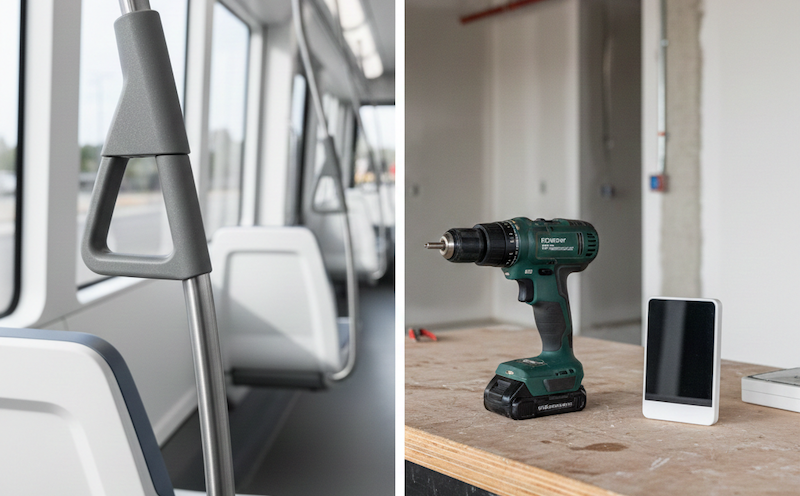
Designing components for the construction and transportation verticals is a high-stakes endeavor. There is almost zero margin for error, which means you have to have absolute trust in the materials you specify.
Whether it’s an interior panel for a mass transit vehicle or the housing for a building’s electrical system, the material must do more than just fit a mold. It has to protect, survive, and mitigate liability.
Exposure to fluctuating temperatures, harsh cleaning chemicals, and high-impact environments means that typical commodity plastics simply won’t do the job.
Historically, engineers have relied on well-known brands like Bayblend™ and Makroblend™ for these applications. However, as supply chains shift and the demand for precise material solutions grows, many are looking for high-performance alternatives that offer both reliability and dedicated technical support.
That is exactly what we are discussing today.
Why PC/ABS Excels in Construction and Transit
Polymer designers often face a trade-off: do you prioritize the heat resistance and mechanical strength of Polycarbonate (PC), or the processability and low-temperature toughness of ABS?
PC/ABS blends eliminate that compromise.
By alloying these two materials, we create a resin that is exceptionally tough and dimensionally stable, making it an outstanding solution for modern construction and transportation designs.
Dimensional Stability and Impact Resistance In the construction industry, parts such as heavy-duty light switches, thermostat housings, and power tool components must maintain their shape despite environmental shifts. PC/ABS offers a low shrink rate and high stiffness, which are key to maintaining functionality for years to come.
For transportation—specifically interior trim and seating components—the high impact resistance of these blends provides a critical safety factor. The material is capable of absorbing energy during stress without failure, a vital characteristic in crash scenarios.
Superior Surface Finish and Colorability Aesthetic requirements are high in passenger transit and premium building interiors. One of the primary advantages of our PC/ABS formulations is their ability to take on vibrant colors and complex textures without sacrificing physical properties. High safety standards shouldn’t require a compromise on aesthetics.
This makes our blends an ideal alternative to Bayblend™, particularly where color matching is a priority.
Key Advantages for Designers:
- Processability: Offers better flow than pure PC, allowing for thinner wall designs and more complex geometries.
- Heat Resistance: Maintains structural integrity in environments where pure ABS would soften.
- Cost-Efficiency: Provides a high-performance profile at a more accessible price point than many specialty engineering resins.
When to Choose PC/PBT
While PC/ABS is a powerful solution for interiors and housings, some environments require a different level of defense. This is where PC/PBT (Polycarbonate/Polybutylene Terephthalate) comes into play.
If PC/ABS is about “toughness and aesthetics,” PC/PBT is about “toughness and survival.” While those concepts may sound similar, they are distinctly different in practice.
At Polymer Resources, our PC/PBT formulations serve as a high-performance alternative to Makroblend™, specifically engineered for parts destined for harsh environments “in the wild.”
The Chemical Resistance Factor In both construction and transportation, surfaces are constantly hit with industrial cleaners, fuels, oils, and lubricants. Standard resins often stress-crack when exposed to these agents.
Because PBT is a semi-crystalline material, it provides a chemical barrier that PC/ABS lacks. This makes PC/PBT the ideal choice for:
- Transportation: Exterior panels, door handles, and engine-proximity components that face fuel splash or road salts.
- Construction: Commercial equipment, outdoor junction boxes, and components used in heavy-duty garages.
Low-Temperature Ductility One of an engineer’s biggest fears is a material becoming brittle in the cold. In the transportation world, a part that shatters at -20°F is a major liability. PC/PBT retains its toughness even in extreme cold, ensuring that safety components perform exactly as intended, regardless of the season.
Key Advantages for Designers:
- Fuel & Solvent Resistance: Resists degradation and cracking when exposed to harsh chemicals.
- Lubricity: Offers a naturally “slicker” surface, ideal for moving mechanical parts like latches or gears.
- Weatherability: Highly resistant to the wear and tear of outdoor exposure.
Conclusion: The Value of a Partner
Choosing between PC/ABS and PC/PBT is a great start, but the reality of engineering is that every project has its own set of “what-ifs.” This is where the choice of a material partner becomes just as important as the resin itself.
While industry giants offer name-brand recognition, the trade-off is often a “one-size-fits-all” approach and long lead times. At Polymer Resources, we operate differently. We view our team as an extension of your design department, helping you navigate the specifics of material selection without the corporate red tape.